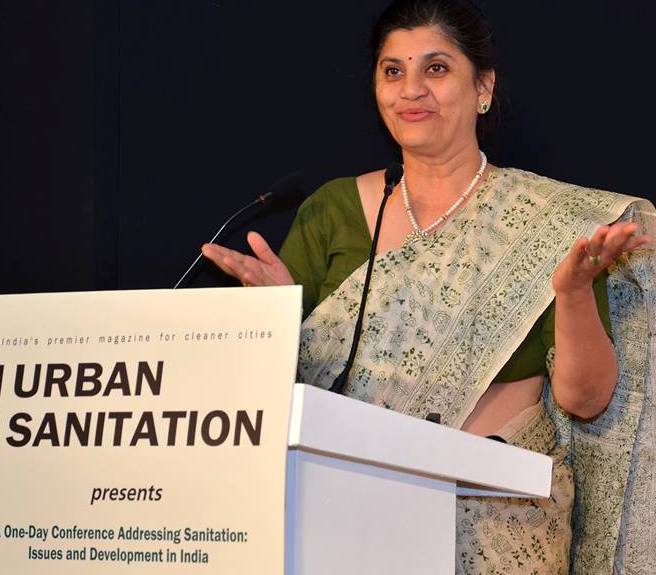
Swati Bedekar, an inspiring woman, runs a foundation known as the Vatsalya foundation. It is one of the most inspiring stories of how one educated woman can help educate millions.
Her journey from being a science teacher to a social entrepreneur began while she was working as a science communicator in the villages of Dahod in Gujarat. The menstrual cycle was a huge challenge in the rural areas. There were several misconceptions about menstruation. Women laborers, construction workers and women belonging to the lower-income strata had problems coping with menstrual hygiene. She has successfully busted myths and helped thousands of women overcome problems.
What went through in making an inspiration for millions?
Swati Bedekar, a BSc and a MBA graduate, was working as a science teacher who loved teaching the students with a practical approach. The children loved her approach of teaching and she taught over 554 tribal children using her creativity and inspiring ideas. She also helped create a laboratory in the school. She says, “I was a science teacher and because I wasn’t a well-trained teacher I started teaching students with a practical approach. I took them to agricultural universities and also made toys so that they could learn more freely and properly. The children loved it.”
How did the idea of Vatsalya originate?
The basic idea of the Vatsalya Foundation was for working for the overall development of women in the society. The Vatsalya Foundation works in cooperation with different governmental agencies. The basic idea was the problem of the girls in rural India who were quitting schooling after a certain age. The attitude of children was a problem or concern for the Foundation and Mrs. Swati. The main problem was the non-availability of good sanitary pads. More than 50% of India lives in rural India. She says, “We are missing out on a lot of Kalpana Chawlas because of the taboos associated with hygiene and sanitary pads. We are working towards the empowerment of these girls and their mothers so that the tools which must be available to them for their better future are available to them at a really less cost.
How can the social taboos be broken?
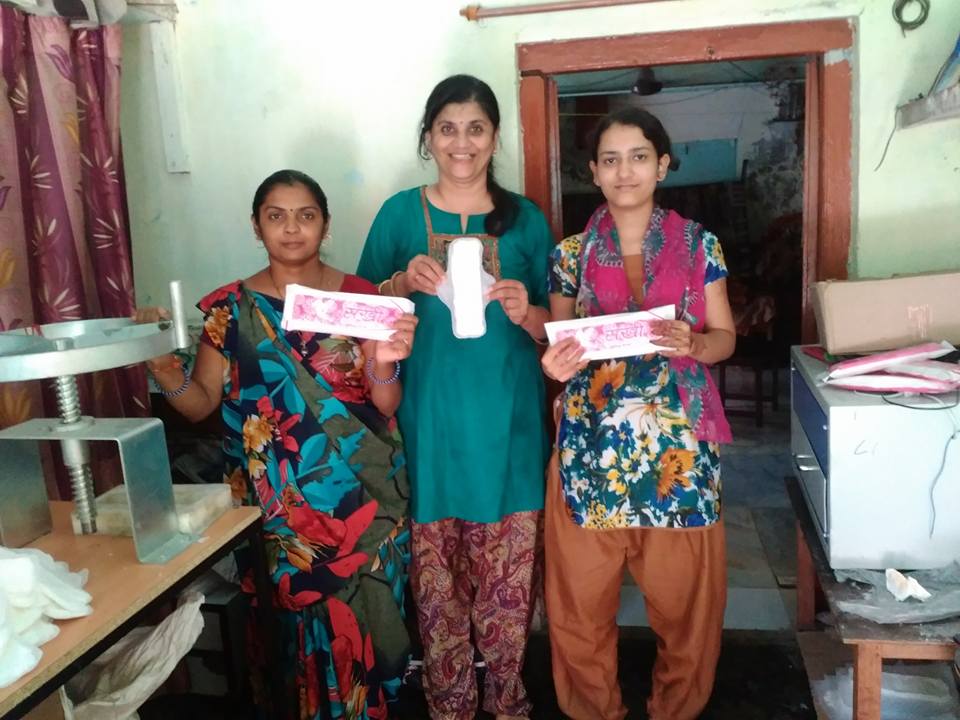
The key to anything in life is be able to break the social norms and social taboos. We all know the social taboos people in the rural parts of India have on different issues. One of the main social taboos is that of sanitary pads. Now, people in rural parts of India would avoid buying sanitary pads because according to these people, they are expensive. At the Vatsalya Foundation, these social taboos are broken because these sanitary pads are developed right in front of the women. They are also designed in a way which is cost effective as well as hygienic.
How does the Vatsalya Foundation help?
The Vatsalya foundation helps in the social transformation of the women by giving them the education they need. One of the acute problems the women in rural India face is that of the cotton cloth. One other problem the villages face is the scarcity of water. Now, for hygienic conditions, the women not only need good sanitary pads but also abundant water. The Vatsalya foundation can help by not only providing good sanitary pads but also abundant water. The farsightedness of the Vatsalya Foundation was so very inspirational that they had initiated the Swachh Movement even before the real plan was germinated. She says, “We had developed Swach Mohalla in 2010 and we always wanted to be ahead of the curve.” She also adds, “The Vatsalya Foundation is a society which also keeps a part of the profit. The profit from our day to day activities is divided among the women who are affiliated with the foundation. “
How does the Sakhi Foundation work?
The Sakhi Foundation is a core board which needs 6 months of functioning before getting admitted to the Foundation. The most important aspect of both these foundations is that all the members of the foundations are women. Today Sakhi Foundation works with 2000 women. She says, “There is a saying that women can’t really stay together and they might fight if they are together. Sakhi Foundation is lucky to have found such smart and amazing women, who have proved the statement to be false. Today more than 2000 women work here in the Foundation irrespective of their religion, caste as well as their economic status.”

The regular pads aren’t that affordable to the middle class or the lower middle class. How to cope with that?
The main problem in India’s villages is the non-availability of good quality sanitary pads. It is not just that, the other main issue is the scarcity of water. That’s where the Sakhi pads come in handy. The Sakhi pads are biodegradable pads and they are also cost effective. The other pads are made of polyester and they are sold at exorbitant prices. The real reason is that the pads which the MNCS make are for the other colder nations like China and the other Eastern European states. But the Sakhi pads are not just well designed but they are also of the best quality possible. All the profits goes to the people working at Sakhi Foundation. She says, “The Sakhi pads are not all that different from the normal pads. They are as good as the other pads, both in design as well as quality. Better in quality perhaps.”
What is the hygiene bucket challenge?
The hygiene bucket challenge is a way of breaking the myth that the Sakhi pads are only for the rural areas. It is often a misconception in the minds of the women of the urban areas when they see something which is cheaper. The challenge is to prove to the women that the sanitary pads are for women from all sections of the society. The hygiene bucket challenge is about giving Sakhi kits (sanitary kits) to 12 women and talking for five minutes on the menstrual cycle. This challenge is highly successful as it is not expensive and also that it has broken the myth that talking about the menstrual cycle is wrong. She says, “The challenge is that a Person has to give 12 sanitary kits to a woman and talk for 5 minutes about the menstrual cycle. This is cost effective and also can help the women to talk about the menstrual cycle without hush hush. The challenge is registered with the Limca Book of records.”
In 2012, Swati’s husband, who studied textile chemistry and engineering in Vadodara invented a simple, cheap and environment-friendly machine, Ashudhinashak, an incinerator to allow women to dispose their used sanitary napkins at the source level. Their products were gaining popularity within the nation and overseas as well. But with time, they realized that the revolution they had started, in the due course, had taken a momentum in shifting fellow citizen’s perception about menstrual hygiene and disposing of sanitary napkins that is the reason they are at the center of discussion. This can help in many ways so that the rag pickers who pick the waste from the dumping grounds don’t inhale anything with toxic gasses. The one of the main drawbacks in the biodegradable pads is that it emits some toxic gasses after some time. It can cause problems for the environment as well as people. The Ashudinashak can help in dumping of the sanitary pads without causing pollution.
What is the age group of women associated with the foundation?
According to her, “We have women from ages 18-60 working with us. It is also said that if you educate a woman you can educate the entire village. So the women in the foundation know everything about how to work in a brilliant way”
A beautiful message for the world to know about?
She says, “The men should respect and support the women as they are the ones who will do the most arduous duty of giving birth to a newborn. So it is the duty of every male to respect the females and not make fun of them.”
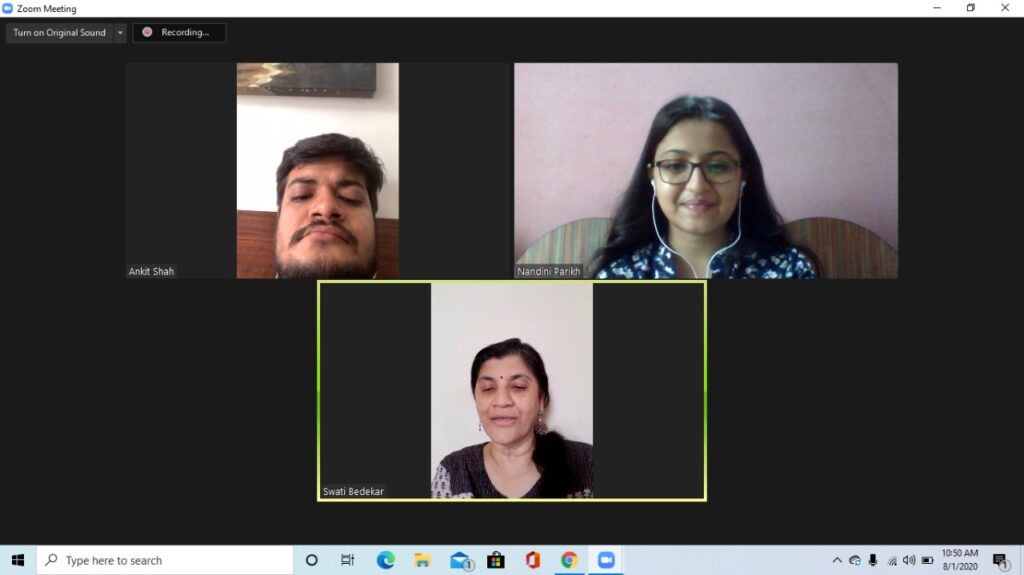
Our team in conversation with Swati Bedekar. Indeed it was one of the most inspiring stories we covered.